Monday, August 19, 2019

St Petersburg - Colorful, Historical, Whimsical


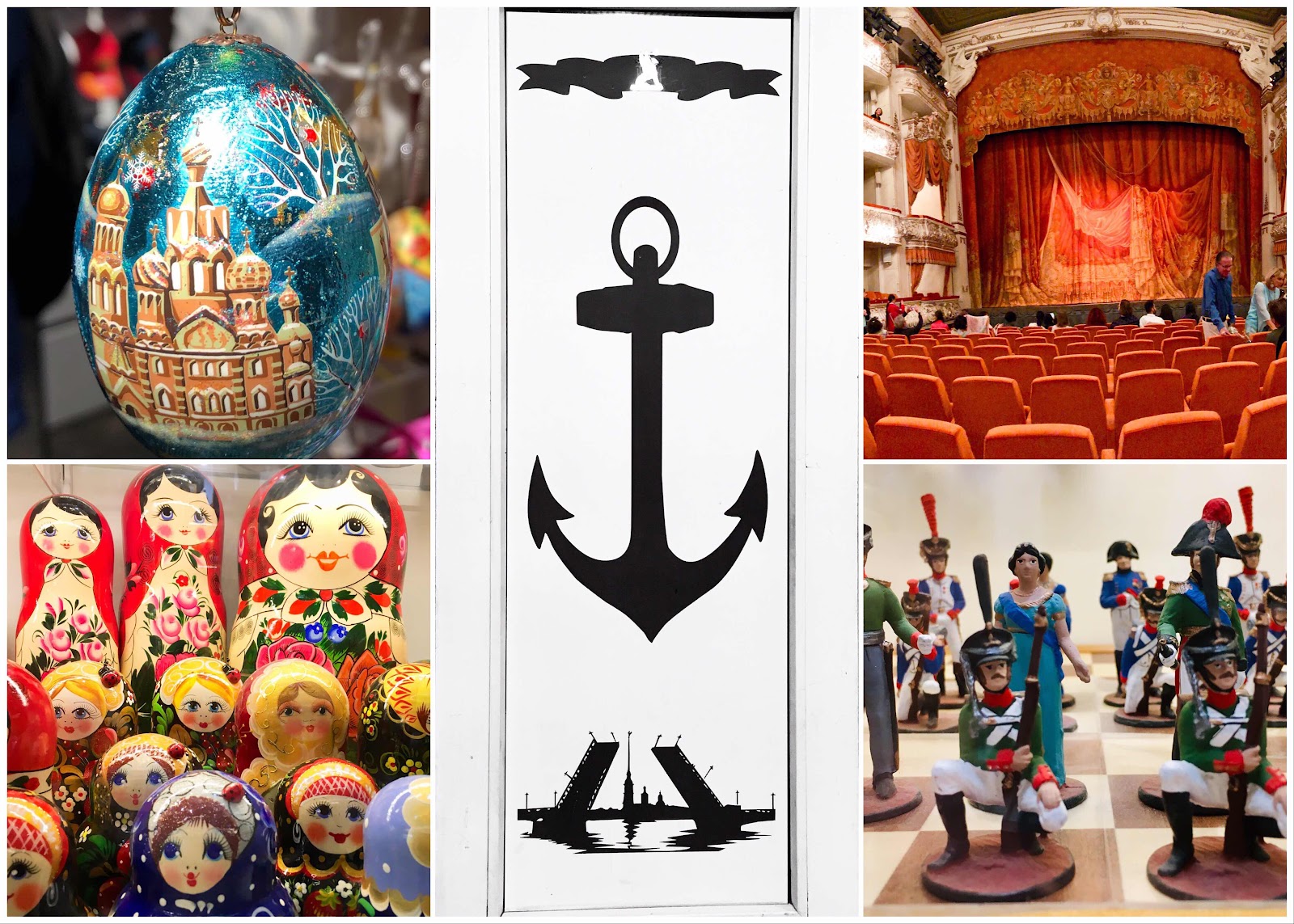
Glistening gilded onion-domes, an unabashed bright color palate and whimsical Baroque architecture,  combine with an intricate canal system to make St Petersburg a city like no other; and its historic center UNESCO World Heritage Site worthy. Tsar Peter the Great founded the city in 1703 as Sanct-Peterburg. He was the first Russian monarch to travel outside of  Russia. He subsequently devised a plan to lure European trade to a new Russian port further south than Arkhangelsk in the White Sea, which would  inconveniently freeze over in the winter months. His vision was to build a city Europeans could relate to architecturally and by requiring that his court to adopted European dress, win them over culturally as well.  Inspired by Amsterdam’s canals, he hired Domenico Trezzini to design the layout of the city and, along with Jean Baptiste Le Blond, its Petrine Baroque buildings wich incorporated Byzantine onion shaped domes. This marrying of West with East gives the city its unique fairytale-like character. Other Russian nobility contributed to its expansion. Both Elizabeth and Catherine the Great added tremendously to of the city as an architectural and cultural wonder. 
This vision came at tremendous cost.  The city is situated on the Neva River at the head of the Gulf of Finland on the Baltic Sea.  Although it has an amazingly large and protected harbor, the area was essentially a swampy estuary dotted with a few small islands. Creating the city required a landfill project that make New York and Boston seem like child’s play.  Tens of thousands of conscribed peasants and Swedish prisoners of war died during its initial creation. In total, it is estimated that two-hundred-thousand died over the twenty years it took to build St Petersburg. 

In his short life, Peter the Great (1682-1725) successfully established the city and moved Russia’s capital from Moscow to Sanct-Peterburg. In 1732, Empress Anna established it as the seat of the Romanov Dynasty, where it remained until the Dynasty’s end in 1917. Over the years it was renamed Saint Petersburg, Petrograd and Leningrad. With few short exceptions, Russia’s capital remained here until Lenin moved the capital to Moscow in 1918.  Today it is the northern most metropolis in the world, considered Russia’s cultural capital and is the country’s second largest city with over five-million people.  


The Winter Palace we know today was built between 1754 and 1762. It was begun by Empress Anna and expanded by Elizabeth to reflect the might and power of Imperial Russia.  It has 1,500 rooms, 1,768 doors, 1,945 windows and 117 staircases and has 176 sculpted figures along its roofline.  Situated along the Neva River, the iconic State Hermitage Museum occupies only six of the Winter Palace’s multitude of buildings.  Its probably best known neoclassical inspired Tiffany green and white facade with gold trim, just gives a hint of what is inside. The Hermitage’s design intent was to create relative simplicity to the opulent Winter Palace, which it connected to via covered walkways and  heated courtyards that held rare birds.  It’s purpose was to house an international collection of art and objects.

After the fall of the last Tzar, Nicholas II, in 1917 the Hermitage was expanded to include other parts of the Winter Palace, which include The Russian-red throne room and Malachite Room, among others that still inspire visions of Tzarist Russia.  Many of the rooms’ surfaces are highly embellished.  Wood floors are inlaid with rare woods from around the world.  Arched hallways are covered in paintings and mosaics.  Soaring ceilings with gilded statuary can be found  everywhere outside of the art object laden galleries.  It’s literally dizzying. 


The Hermitage collection is worlds 2nd largest, most comprehensive and finest. The collection was begun by the purchase of 255 pieces from a Berlin art dealer made by Catherine the Great in 1764.  Put together over two and a half centuries, it’s 3 million pieces reflect the development of the world from the Stone Age through the 20th century.  The paintings include many of the best known Renaissance and pre-Renaissance artists.  Renoir's Prodigal Son is simply magical. Leonardo Da Vinci Madonna and Child is iconic.  But it was the  strong graphics of the 16th century Maiolica glazed earthenware engagement plates that caught my eye. Moorish potters from Maiolica, or Majorca, are reputed to have created these in Sicily.  They capture the image of a potential bride or announce an engagement. NOTE - the fantastic impressionist and post-impressionist collection, which I remember so well from a 1991 visit, has been moved to another part of the Winter Palace and is now in a the general staff building. We didn’t make it this trip, but it’s absolutely worth it so please do!

The empty gilded frames pictured abode are NOT pieces currently out on loan. This is from a series of digitally manipulated photographs, The Hermitage 1941-2014, by the artist Yasumasa Morsimura that can be found throughout the Winter Palace. The series was inspired by a little known episode in the life of the Hermitage. During the Great Patriotic War, aka WWII, (1941-1945) the Hermitage staff cut hundreds of  canvases from their frames, layering them between straw and hiding them away before the Nazi troops cut the city off from the rest of the country.  For decades afterwards, Hermitage staff would give tours describing in great detail the previous content of the empty frames.  This remarkable event acts as a backdrop to a highly recommended novel, Coffee and Vodka, by Finish author Helena Halme, about immigration, war and its long term affect on families. 


Church of Our Savior in Spilled Blood is so named because it was constructed on the spot where Tsar Alexander II, a reformer best  known for the emancipation of Russian serfs, was mortally injured by political nihilists in 1881. This Russian Orthodox Church was funded by the Imperial family and constructed between 1883 and 1907.  The church’s exterior is festooned with five gold and brightly colored sculpted onion-dome cuplolas.  The interior is a riot of gold and enamel mosaics, which are so intricate that they are indistinguishable from paintings unless one looks very closely.  In recent years, the church has reopened for limited services, although as our guide shared, that after the State’s  extended suppression, many Russians are learning the various aspects of Greek Orthodox services and faith for the first time.  


The St Peter and Paul cathedral and fortress is the city’s first and oldest landmark.   By pure coincidence, the cathedral’s names are those of the first two assassinated Russian emperors - lots of that in Imperial  Russian times! The cathedral acts as the burial vault of all but two Russian emperors. Even the country’s last tsar, Nicholas II remains were finally entombed here in 1998, after his remains disappeared upon his 1918 assassination.  The dombed cathedral’s interior is encrusted in gold  with malachite green finishes.The bell tower is the world’s tallest for a Greek Orthodox Church.  On the exterior is a cast bronze plaque memorializing residents who painted the bell tower grey, successfully disguising it from WWII bombing raids.  The  building, it’s interior and many stories, is awe inspiring.  

New Holland island was created in 1719.  (You remember the peasant and prisoner workforce?) It was named after the city that so inspired Peter the Great. It’s island location protected timber from city fires and integrated canals and locks made it perfect for shipbuilding.  In the 1820’s it became a military point and naval prison, fondly called the Bottle House.  After being closed for decades, it reopened to the public in 2016 and is dedicated to the persuit of fun! The prison is in the shape of an oval with a large interior courtyard.  The three floors maintain the original prison rooms and are a combination of coffe houses, restaurants, bars, well curated shops (we loved the retro and contemporary book store), yoga and dance studios.  Outside is a playground and grassy areas for various outdoor activities, movies, concerts and even free (clearly this is not a capitalist economy) chairs for relaxing. The island’s  local arts school and art making space has recently been invaded by magenta snails, one giving a ride to Evie. In the winter, part of the outside is flooded creating an ice rink for skating, so there’s no reason to miss out on St Petersburg’s answer to Moscow’s Gorky Park. 

Piter, as the city is know by locals, has many enticing things to do and see; from Nevsky Prospects street’s shopping to the world’s deepest most elaborate subways. The waterways throughout the city make it particularly enticing.  But come prepared.  Temperature swings and brief precipitation is the norm.  A $1,000 visa is the cost to wander at will. However private guides are a far less expensive workaround. And, frankly, if we had been with and then left the cruise group and simply taken a taxi back to the boat, no one would have been the wiser.  Russia is now wide open to travelers and “State followers” are not what they used to be. If you do make the trip, travel to both St. Petersburg and Moscow, about 300miles south  by train. The two cities could not be more different and clearly reflect the principal differences in the country’s ethos and government from the time of Peter the Great, through the Romanovs, to Lenin, Stalin, Krushev, Gorbachev and the present. 


Monday, August 12, 2019

Cruising the Baltic - Tallinn Estonia - a Fairyland


Home away from home

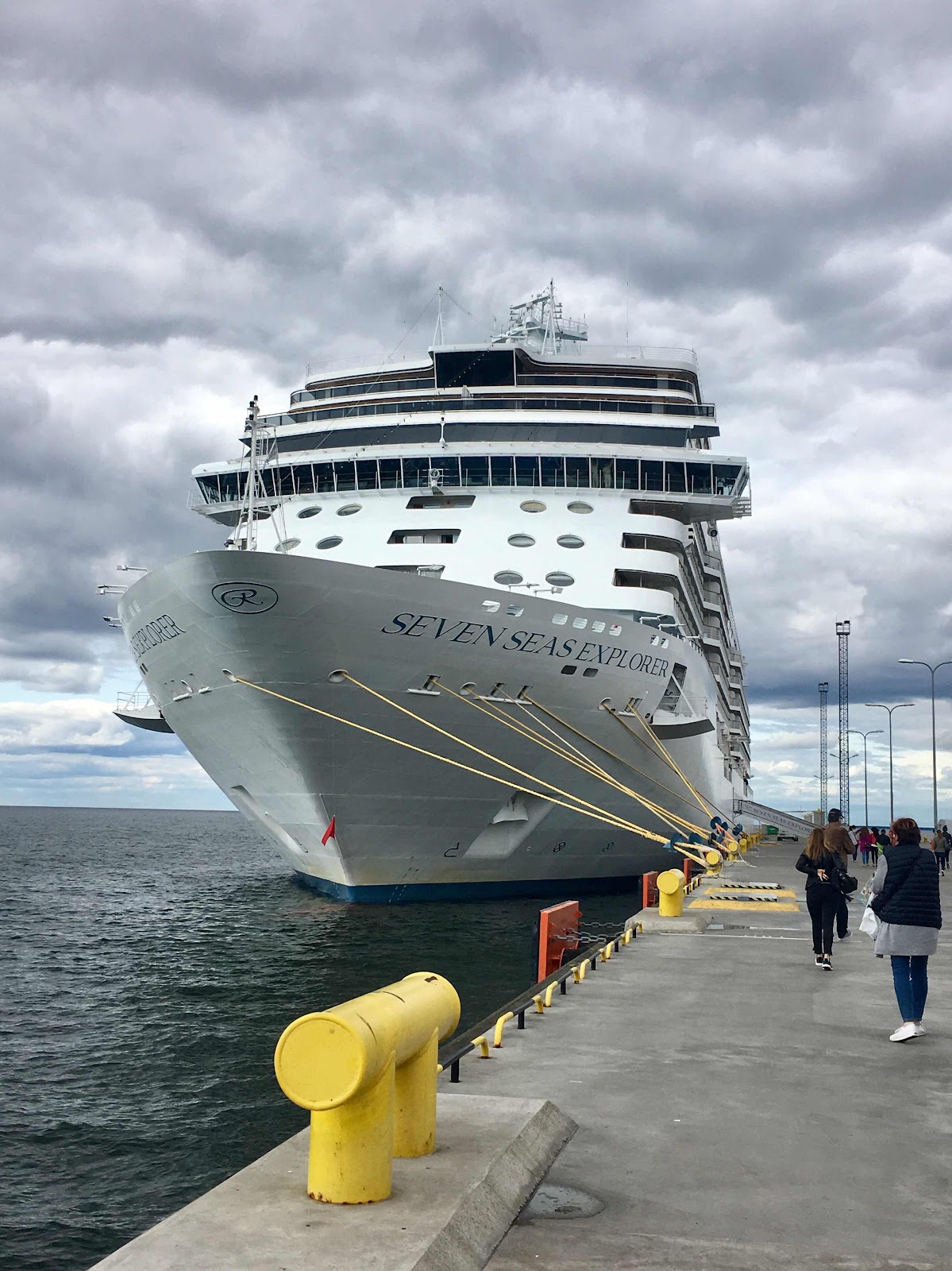
We are cruising the Baltic on the Seven Seas Explorer with Jeremy, Erin and the girls.  Ten days of cruising means about 8 stops, so brace yourself.  There could be as many blog posting in about as many days.  

And no, Blue Chip has not been replaced, but please don’t tell her. She gets jealous, but the crossing would simply have been too much for her.  We’re sharing the ship for with about 700 hearty souls. The number of passengers initially had me in a panic, but the ship size with all suite rooms, numerous common area spots and multiple restaurants gives everyone room to breathe.  There are numerous on board activities with a focus on fitness rather then crazy amusement parks  and water slides. The Kids Camp has a wide selection of day and night activities offering 8 year old Evelyn an escape from the rest of us and Clara time to have the room to herself.  The adults are having a good time too.  


Tallin, Estonia’s capital, is an absurdly photogenic walled medieval town. Although first mentioned by cartographersa in 1154, the city we officially  founded by the Danes in 1219. It is located on the shore of the Gulf of Finland and is about 380 miles east of Stockholm, 50 miles south of Helsinki and 200 miles west of St Petersburg.  It has close historical ties with all of these cities.  Their countries, as well as Germany and Poland, at one time owned Tallin. For many years it was better known by its historical German name, Reval. Each of these countries protected this valuable harbour and trade cross road location, which explains why it was preserved and is one of Europe’s  most complete Medieval walled cities and thus a UNESCO Heritage City.   


The name Tallinn means the castle town of the Danes. It is by far Estonias’s  most populous city (435,000 out of 1,325,000).  After a brief War of Independence at the end of World War I, Estonia gained its independence from a weakened Russia in 1920. During World War II it was repeatedly occupied by the Germany and the Soviet Union, from which it again gained its independence and joined the EU in 2004 as a democratic parliamentary republic with uiversal health care, education and the longest maternity leave in the OECD. It is considered one of its fastest growing EU economies and is notably internet savvy - using it for elections and e-residency.  Tallinn’s blue and white striped flag mimics Estonias and reflects the colors of its city’s Coat of Arms.  Estonia’s flag colors represent a blue for sky, a black for rich soil and white for hope.


What immediately strikes you in Tallinn’s Old Village is the wide variety of pastel tones, which make you feel warm, even on a chilly drizzling  day. Arches you pass through are often part of  the medieval wall and curved, narrow cobblestone streets remind you of the city’s origin at every turn. The large cobble stone town square is lined with places to grab a bite.

Many of the doors are incredibly colorful and graphic This green, gold and red is particularly interesting, with a dark skinned man at the top.  He represents the Brotherhood of the Blackheads. Originally founded as a military organization, overtime it became less military and evolved into an association of local, unmarried merchant shipowners and foreigners. They were active here from the 14 century until 1940. The door is worth searching out!


The whimsey of the Old Town is impossible to escape.  Definitely stop at the Kohvik Cafe - the cities oldest. Marzipan figures are incredibly detailed and lovely with a cup of cappuccino.  It’s counter top ferris wheel carefully balances cups, saucers and spoons. 

Weather vanes, looking like filigree   sculpture, punctuate decorative gables.  Many of the multi colored facades have a story.  This gentleman was added several hundred years ago by a young couple who became aware that he had been watching his across street young newlywed neighbor while she dressed. Rather than confront him, they added this decoration to remind him, and his neighbors, about his peeping habits.

Medieval  and Renaissance  singing and instruments can be heard at St Catherine’s church.

You may not  have plans to travel to Estonia in the immediate future.  But maybe you are on a Baltic cruise, as we were, or maybe Helsinki or Stockholm are in your plans? If so, definitely keep Tallinn on your list.  There are few places in Europe that are like this,  a placewhere you feel transported; that feels genuine; that doesn’t feel sleek and brash.  You’ll be glad you made the trip - even if it is just for a day, although why not stay longer?


Friday, August 9, 2019

Stockholm - Less Known, Bridal Showers & Mystery-man

 
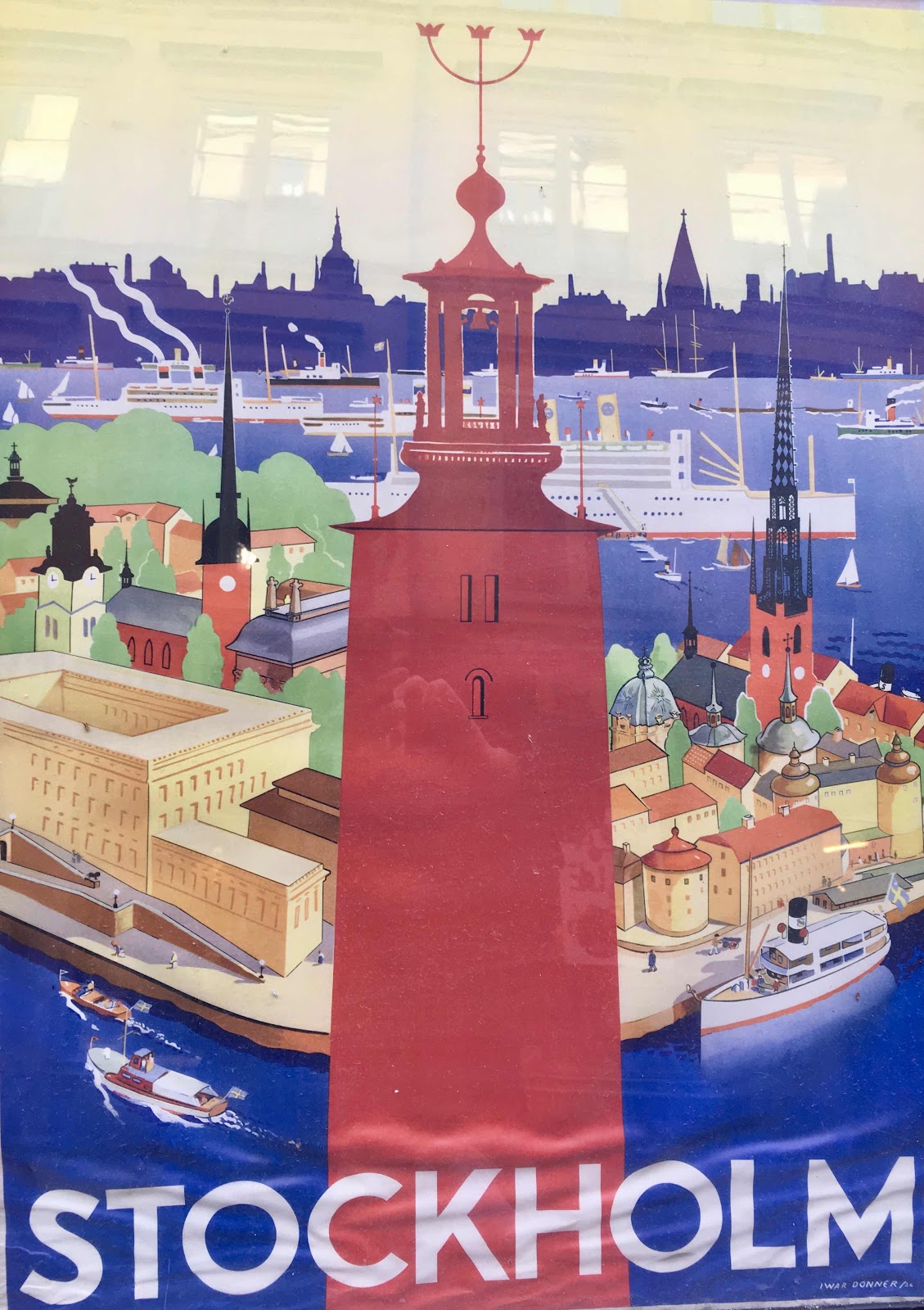
Stockholm is on the must-visit list for anyone evenly remotely interested in visiting Scandinavia.  So why bother with a blog page about a city already known for its spire dotted harbour horizons and butter-yellow colored buildings? What is there to add? Among this city of islands there are stories worth searching out and a mystery waiting to be solved.
First - Why do the Swedish flag colors  differ from its Scandinavian relatives? The colors are found in its 1442 coat of arms and the graphic design mimics the Danish flag; Sweden’s chief rival in the 15c. The bright light blue ground represents justice, loyalty and truth while the gold cross for Christianity or generosity.  The design was first documented in 1521.

Second - Who is the bronze fellow found perpetually leaning against a wall in the cobblestone streets of Gamla Stan (Old Town)? Evert Taube (1890-1976) is a Swedish author, artist, composer and one its most respected musicians and troubadour of Swedish ballads. Take a listen to a medley of his music!

Third - Does Pippy Longstocking ever age?  AKA Pippi Långstrump hasn’t aged a day since she first appeared in 1945 as the orange pigtailed main character of countless books authored by Swedish author Astrid Lingren. Make note; mischief is reported as the secret ingredient in keeping her young.  

Fourth - Who is Alfred Nobel and why the prize?  Alfred Nobel (1833 - 1896) was a complex man. The Swedish philanthropist was also an industrialist, inventor who held 355 patents and discovered dynamite.  He surprised those attending the reading of his will, with creating an endowment which established the Nobel Prize: I intend to leave at my death a large fund for the promotion of the peace idea, but I am skeptical as to its results. Maybe he was a karmic believer?  The 5 annual prizes honor advancements in Peace,  Chemistry, Literature, Medicine and Physics.  Find the Nobel Prize Museum (Nobelmuseet) in the Old Town’s old stock exchange. The changing exhibits make this a thoughtful experience. 


Have you ever considered the origin of the Bridal Shower? In 1684 Christopher Theil opened a public bathhouse, which included the extravagance of bathing amongst flower petals and herbal essences.  Personal hygiene at the time was a bit hit or miss. Cleanliness of brides was highly prized and thus Rosenbads, rose enfused bath, followed by a party became a local tradition.  If Mr Theil could only have seen into the future! 


Where to stay?  Always a big question.  Hotel Skeppsholmen is located along the water in a 17th century building with a country chic vibe and all the modern conveniences.  It’s located on the lovely small green island of the same name and easily accessible to Old Town or downtown in 10 minutes by ferry or foot. The Moderna Museet (Modern Museum) is also located there.  It houses one of the world’s most comprehensive collection of modern art, 100,000 image of photography and outdoor sculptures, including Pablo Picasso’s 1962 sculpture Lunch in the Grass.  Note: don’t plan a Monday visit, or maybe you should? The Moderna Museet is closed, but you can still wander the island and have a coffee at the hotel while quitetly watching Stockholm’s busy waterway. 


What to do on a Monday? A number of the art museums are closed, so look for outdoor artists.  It’s always a treat.  There is also the Spiritmuseum and tasting room to explore the history of Aquavit.  The open-air museum, Skansen, was one of the first of its kind and demonstrates traditional methods of making glass, bread, even medicine and includes 150 historical buildings and zoo with a collection of popular Nordic animals.  Granddaughter Evelyn particularly likes the lynx. 


Mystery question: do you know who this man is? Your not alone. Located in the lovely atrium area of the Kungliga Slottet (aka Royal Palace) between the cafe and gift shop, he stands over 10 feet tall among several others who are apparently from the same time period. But it’s the mustache that makes him stand out - clearly not in sync with his Roman robes and herbaceous crown.  We asked and were referred to others on the palace staff but no one knew.  King Carl Gustafsson XVI was in residence, but unfortunately not available.  If you do find out, please let us know. 


Description


DescriptNobel Peace Prize is one of the five Nobel Prizes established by the will of Swedish industrialist, inventor, and armaments manufacturer Alfred Nobel, along with the prizes in Chemistry, Physics, Physiology or Medicine, and Literat


Sunday, July 21, 2019

London - Starting at Zero

ZERO - Where Time Begins
Greenwich meantime - GMT.  Now be honest.  Where do you imagine this is located? And how do you think its location was determined; possibly some sophisticated, unique astronomical determinant? Well, as a long time boater, engineer and history buff, this question has been occupying Captain Steve into the wee hours.  Imagine our surprise to discover that a quick ride on the Thames fast ferry, exiting at the Greenwich Pier, walking up the hill to the Royal Observatory and you’re there!


Greenwich Mean Time (GMT) defines time for the world. Talk about drawing a definitive line, GMT is actually the orange line you see above. It’s the world’s prime meridian line, located at Longitude 0, 0’, 0” and Latitude 51, 28’, 38”. When the sun is at its highest exactly above the prime meridian, it’s 12 noon on the Shepherds Gate Clock, the name of the 24-clock showing GMT, which  is located at the Royal Observatory at Greenwich, a borough of London England.

The  concept of GMT began in the 15th century to aid navigators in finding the “New World”. In 1675 the race to create accurate navigational maps was formally launched by King Charles II (pictured far left) when he gave land to the Royal Society for Britain’s first National Observatory; designed by the famous British architect Christopher Wren. The building and its dome are in place to this day. Over the next two centuries,  competitions ensued to make clocks more predictable and map makers began to set latitude. Finally on November 1,1884 GMT was universally adopted and the international date line, as well as a 24 hour time zone established. To put this into perspective, at that time there were over 300 local times in the United States alone. 
ONE - Iconic Sporting Event
There is only ONE Wimbledon, with its iconic purple, green and white colored logo.  The  first Wimbledon Championship was held in 1877 on a croquet lawn of the All England Croquet and Lawn Tennis Club. In 1884 a woman’s championship was introduced.  Good thing, or we wouldn’t have been able to see Serena Williams play Giulia Gato-Montiocne on a very warm July 2nd.  That was after Rodger Federer played  Lloyd Harris on Central Court.  It was very thoughtful of Kate and  Carmella to save us seats in the Royal box! 


TWO - Teams Worth Worth Traveling For
So what prompted this trip to London you might ask. Have you heard of the Red Sox and Yankees rivalry, arguably the most combustible in baseball? Well, if your boys were flying across the ocean to play the first ever regular MLB season games in Europe against “the evil,empire”, what choice would you have but to follow along?


So there we were at London Stadium, in Stratford in northeast London’s Queen Elizabeth Olympic Park at what was originally the 2012 track and field venue, now the home of the West Ham United Football Club - soccer to us Americans.  


 Nearly 60,000 fans packed both games, including Prince Harry with his American wife Meghan Markle,  now the Duchess of Sussex. There was fantastic pageantry with oversized country flags and dueling national anthems sung.  First pitches thrown, British little leaguers showed their stuff and the games commenced.  Take Me Out to the Ball Game was interspersed with God Bless America and, of course, Sweet Caroline for the Boston crowd.  Yankees ended up winning both games, but that didn’t deter cheers from Sox fans, who were disproportionality represented.  The sea of red would indicate that nearly half were Boston fans - which is amazing when you consider that Boston is a city of about 650 thousand and New York a city of over 8 million.  Goooo Sox!!!

THREE - Bridges out of 33
There are 33 London Bridges - here is three of our favorites from this trip. 


Millennium Bridge, which opened in June of 2,000. It’s a 1,000 foot long pedestrian footbridge that connects Christopher Wren’s iconic St Paul’s Cathedral with the Tate Modern and Shakespeare’s Globe Theatre - or The City of London with Bankside.  Londoners nicknamed it the Wobbly Bridge after experiencing a slight swaying at its initial opening.  It’s since been fixed and yes, there are other ways to get across the Thames, but a wander across the Millenium Bridge is so much more memorable!


The Tower Bridge was built in 1894 and is located near the Tower of London.  The bascule design is 801 feet long with a 230 foot span that can be raised up and down as high as 139 feet, allowing  ships to access the port facilities at the Pool of London, between London Bridge (that’s next) and the Tower of London. On average it opens twice daily. 


London Bridge did actually fall down, or was pulled down several times during its history.  The first was a wood structure built by the Romans. In Medieval times it was replaced by a stone bridge and then another stone arched bridge in the 19th century. The current concrete and steel version was opened to traffic in 1973.  

FOUR - Performances Worth Searching For
What would a visit to London be without taking in its live theatre? Tickets or free, it’s all there for the taking!


Charlie Chaplin has taken up residence at an outside space at Covent Garden.  We saw him in 2012 down near the Tate. Charlie’s only gotten better!   Tina is one of the best of its genre and currently one of London’s most popular theatre offerings. By the end, your absolutely guaranteed to be on your feet and singing!  The Lehman Trilogy is as much about the immigration story as it is the history of the rise - and fall - and rise - okay and the challenges  of capitalism. As fascinating as the story, is the simple set design and versatility of its three actors who play multiple characters without changing costumes.  Definitely one to see.  And then there’s the live music. 
London truly has something for all tastes and walllets. 

FIVE - Museums Worth a Wander
Museum shows can be a tepid in the summer, but not so in London. There  are a couple of annual summer shows that you absolutely won’t want to miss! And London Art Week keeps venues opened on Sundays, with opening parties and visiting artists at many of the galleries near St James.  

1. The National Portrait Gallery’s Portrait Award - showcases 44 diverse and exceptional work selected from 2,538 international entries done in a wide variety of mediums and considerd anonymously by the judges, is in its 30th year.  Catch it between mid June and October. And it’s free! The National Portrait Gallery has the most extensive portrait collection in the world, with 215,000 works, spanning the 16th century to the present day.


2. The National Gallery - Has an exceptional collection of Flemish and Dutch art among its 2,300 pieces that date from 1250 through  the 1900’s.  The collection has three of Johannes Vermeer's 35 paintings completed in the mid to late 1600’s, known for his simple composition  and ability to capture minute reflected light.


3. The Royal Academy of Arts also has an annual juried show of 1,500 pieces called The Summer Exhibition, Rooms are organized by themes set by the show curators. All of the pieces are for sale, so bring your checkbook.  Note the red dots on this perennial favorite Stolen Thunder (The Final) by a a Camelia Parker. There’s a story there.  


4. The National Maratime Museum is the world’s largest maritime museum. What stands out is the truly state-of- the-art interactive exhibitions that covers an exceptionally broad array of topics from new world to arctic explorations. Give it a try.  Truly.  We liked it so much, we became members so that we could go back for more.


5. Old Royal Naval Academy 
The building itself was designed by, you guessed it, Christopher Wren.  But you want to come here to see the Sistine Chapel of the United Kingdom. Measuring over 43,00 square feet, no picture can do this oil paint on plaster justice. Sir James Thornhill painted this ode celebrating the English Monarchy over a 19 year period beginning in 1705. The ceiling recently went through a 2-year renovation that cost nearly 11-million US Dollars and reopened in March of 2019. 


Wednesday, May 29, 2019

Artists & Roamers - Abiquiu, Santa Fe, Galisteo, Madrid, Corrales, Albuquerque

 
O’KEEFE’S PEDERNAL FROM GHOST RANCH, ABIQUIU, NM

Artists and photographers will talk about being mesmerized by certain locations;  the color quality, the light.  This can be difficult to understand until you have experienced it, then there is this sudden ah-ha moment.  New Mexico is one of those places.  The endless flat plains between the mountains, the rich warm color of the soil punctuates softly hued sand and sage colored growth, the contrast of mountains rising, the way foliage mimics the diverse colors found in the landscape - all of these combine to create a landscape that draws you in, allowing the individual to feel minute among majestic forms. This sense of being inconsequential is oddly freeing.  And then there is the light - harsh yet warm with dynamic changes throughout the day. Is it the particulate matter that hangs in the atmosphere or the incompressible above sea level heights that create this magic?

All of these elements comes together perfectly in Pedernal, painted by Georgia O’Keeffe in 1941 from her Ghost Ranch studio home in Abiquiu, NM.  The Cerrillos Pedernal, which means “flint hill”, is a narrow mesa in northern New Mexico that lies on the north flank of the Jemez Mountians, just south of Abiquiu Lake.  It was a popular subject of O’Keeffe’s who had her ashes scattered here.  The location catches one’s  breath and gently blows it away.  

 
OKEEFFE’S BLUE RIVER IS OF THE CHANA RIVER BETWEEN ABIQUIU AND ESPANOLA, NM

 Try this article Why So Many Atists Have Been Drawn to New Mexico for insight into why this out of the way place maintains such a powerful draw.

Georgia O’Keefe (1887 - 1986) is arguably the artist most strongly associated with New Mexico. Born in Wisconsin, she studied at the Art Student’s League in NYC and ended up in New Mexico purely by chance. One visit was all it took to make this land her new home.  In comparison to her contemporaries, her work was singular in subject matter (often flower abstractions) and style. She was both controversial and highly popular in her own time. Her love of wearing black only gives her extra points with me. 
UBIQUITOUS CHILIS AND THE UNIQUE LORETTO CHAPEL 

Santa Fe, NM - iconic in so many ways - is New Mexico’s capital city of roughly 83-thousand residents, the 4th largest city in NM and sits over 7,000 feet above sea level, although drive a few miles out of town and you will easily get closer to 10,000. Wonderful restaurants abound, as well as art galleries, cultural venues and its famous plaza market that sells much sought after turquoise and local crafts are all a sampling of what attracts people here.  The Loretto Chapel, which opened in 1878,  is known for its its unusual 20 feet tall helix-shaped “Miraculous Staircase”. The Sisters of Loretta credited Saint Joseph with inspiring its wooden construction held together by wooden pegs and glue.   If you’ve been to Santa Fe, the chances are you have been to the chapel or the weekend art market held on its grounds.  
THE INN OF THE FIVE GRACES - SERET’S ONE-OF-A-KIND CREATIVE OASIS 

What you would not expect is a multi cultural, eastern oriented retreat in the heart of Santa Fe.  The Inn of the Five Graces is a boutique Relais & Chateau hotel retreat, owned and every inch designed by Sylvia and Ira Seret. Each room is completely unique. It’s installed with textiles and woodwork imported by the couple and mosaics designed and physically laid by Sylvia. (The Lavender suite includes a sitting room and kitchenette living dining space that’s worth entertaining in!) The couple is likely best known for introducing what became much sought after middle eastern design in the mid 1960’s. If you are of a certain age, you remember the highly embroidered fur trimmed vests, coats and boots offered by Anne Klein and Oscar de la Renta, becoming so popular it eventually made its way down to the masses.  Their nearby store, Seret and Sons, has every imaginable textile, stone and woodworked import that attests to the collaboration they have with designers around the world, as well as their ongoing commitment to being a Silk Road design resource. Their cottage industry efforts begun decades ago persevere to this day.  

INTERIOR ACCENT COLORS AND SPRING FLOWERS REFLECT SUN-PAINTED LANDSCAPES
 
Galisteo, NM - has roughly 253 residents, is 2.5 square miles and is 6,000 feet above sea level. Less then 25 miles from Santa Fe, it is known to be a haven for artists and writers.  Simple adobe houses and casitas are surrounded by adobe walls, yet there is a feeling of quite comradery.  My friend Jennifer has been slowly restoring a small home with brick patio and casita.  Now a print making studio will continue to tempt her from Chicago to this creative and colorful retreat.  (If your driving from Santa Fe to Galisteo stop halfway at Cafe Fina for a wonderful assortment of food and to pick up, the most recent silk screened sackcloth towel designs from Kei and Molly .)


BLINK AND YOU COULD MISS IT - BUT STOP AND YOU’LL BE GLAD YOU DID

Madrid, NM - has 204 residents and is about 1.4 square miles along NM State Road 14 - AKA The Turquoise Trail.  Hailed as an artist colony, some would say it’s where to go if you cannot afford Santa Fe.  I would say make a stop for an authentic unadulterated Southwest moment. The  Holler is an indoor/outdoor restaurant directly across from the much larger, boisterous Mine Shaft Tavern that hosts bands and the occasional crawdaddy fest. (Enjoy the music but crawdaddys that far from water might be worth a pass.) Stopping at Range West for the mica flecked pottery, stonework and exceptional exotic woodwork from couple Kathleen Casey and Joshua Gannon makes the trip worthwhile. Wildland Press offers letterpress materials, but it’s  Blossom Merz watercolor pallets, hand-ground from locally collected minerals, that will inspire you - even if you’ve never attempted watercolor before.  But call ahead (505-629-0763). Blossom is often out of town on concert tours. 


PAINTED LADY BUTTERFLIES - FEASTING ON LOCAL SALVIA 

Corrales - a village of Albuquerque, NM -  has a population of 8-thousand, was founded by Spanish Colonists in the late 1500’s and has long been a center of agriculture.   Many of today’s  residents enjoy keeping donkeys, horses, llamas and various other livestock and, again, artists abound with printmaking seemingly abundantly  present. The Rio Grande Bosque borders it’s eastern edge, providing refuge for native animals and plants.  The village continues to maintain its rural character, fighting the nearby intrusion of Albuquerque and Rio Rancho. It’s open spaces act as one of the staging areas for the well known annual Albuquerque Ballon Festival.  Or simply call our friends the Stockers and they’ll provide the inside scoop.  There are a number of galleries sharing the work of local artists and plenty of small restaurants to settle into. 

THE NATIONAL MUSEUM OF NUCLEAR SCIENCE AND HISTORY

Albuquerque, NM - has a population of over 500-thousand - by far the largest in NM and 32-nd most populous in the US.  It’s greater metro area (which includes Corrales) has nearly 1-million.  It is over 189 square miles and sits in the high desert at an elevation of 5,300 feet above sea level. The city, was founded in 1706 as a Spanish  colonial outpost along the Camino Real. Today it is a mixed sprawl of old and new. It boasts  a selection of cultural venues and diversity of museums that might surprise you.  Besides art and music, there is the well known annual International Ballon Festival in early October.  The Albuquerque International Balloon Museum is a fantastic surprise. Dedicated to “the worldwide history, science and art of all types of ballooning and lighter-than-air flight”. You’ll love it.  Okay - you might think too much time was spent in the sun, with little oxygen, but I promise that once you try the balloon flight simulator, you simply won’t want to leave.  Steve is begging to go back for summer camp!

Then there is the National Museum of Nuclear Scince.  It’s not what you think and no matter how much time you have earmarked for it, it’s not enough.  It’s a national repository of nuclear science as chartered by Congress to tell the story of the Atomic Age spanning “early research of nuclear development through today’s peaceful uses of nuclear technology.” Besides understanding the international backstory to the Manhattan Project, and the devastation  it led to, there’s the opportunity to see how this scientific evolution impacted the world culturally.  High Atomic Culture Films (1949-1963) reflected the euphoria at the end of WWII and included action adventure, scince fiction and comedy - including Mickey Rooney. (Am I showing my age?) Exhibits on today’s sources of energy and nano technology will fascinate and of course there’s a direct correlation between truly understanding these exhibits and youth. Next time I’m going with my eight year old granddaughter! And naturally there’s a pervasive nerdy humor that only an MIT grad can truly appreciate, so stop at the gift shop to find a plethora of nerdy humor gifts for that hard to shop for engineer or lovable high tech geek.  


New Mexico’s rugged magic was first discovered by Native Americans. These indigenous populations arrived countless decades before Western European populations and have forever influenced its very fiber. Today there are 23 Indian tribes - nineteen Pueblos, three Apache and the Navajo Nation.  They understood the power and beauty of this place of extremes in a way few can - except maybe a handful of artists and those who sit quietly enough to let this place tell its story.  It’s worth the silence.  


Friday, May 17, 2019

Getting My Fix in NYC


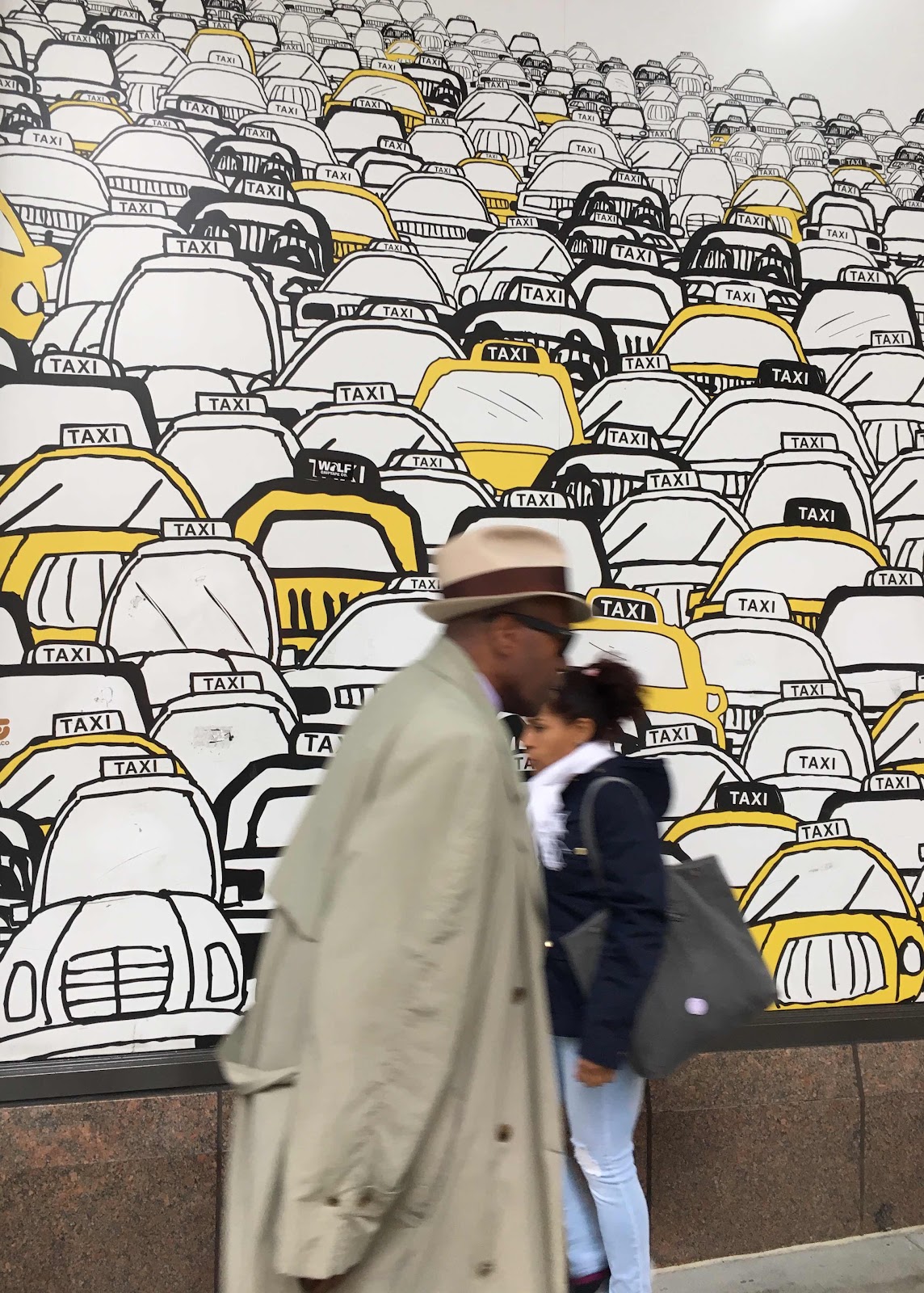
NYC ICONIC YELLOW CAB

Many decades ago I found myself working on a project, back in New York City after moving to New Orleans with the intent of never returning to The City, where I had been living and working for some time.  I’ll always remember being stopped by Rick, a much older executive I had previously worked for, who said to me with a big knowing smile, “I knew you’d be back. When your from New York, you never really feel at home anywhere else.” At the time I was highly skeptical.  Although I was born in NYC, I grew up on Long Island and, although we visited The City regularly, I certainly never meant to actually live here or work for a large corporation. I wanted a small college town - the countryside with intellectual stimulation and a position as an art therapist - joining my passions into a manageable life and hippy-crunchy-granola leanings.  Well those of you that know my story can attest that’s not exactly how it worked out - on ANY dimension.  I stayed in NYC for twenty more years, had boyfriends, married, had complex responsibilities in fortune 100 companies, could walk miles in heels and didn’t own more than one pare of jeans until I was nearly 50, although I did learn to make an excellent granola and did canning of farmer market finds in my kitchen. And Rick was right - no matter where I live or travel, as soon as I’m back in New York, I know I’m home - with my tribe.  


HUDSON YARDS - “VESSEL” AND LOOKING WEST OVER THE WEST SIDE YARDS 

On a VERY damp and chilly day, my Mom and I made our way to Hudson Yards. This is an area on the west side of NYC, around 34 to 36 Streets that reaches from the Long Island Railroad and will have platforms extending over the West Side Yards, the train  storage area, which you can see above. Upon its completion, it will be the largest private real estate development in the US by area and be comprised of green spaces, mall, cultural facilities, hotel, office and residential buildings.  The ground breaking was in December 2012. It first opened in 2019, with the focus on green, cultural and mall spaces.  “Vessel” is a massive sculpture and the project’s centerpice. The intent of its British designer, Thomas Heatherwick, is to “lift people up to be more visible and enjoy the views and perspective of each other.” It’s 154 interconnected staircases that create over a miles worth of climbable pathways provide that opportunity.  We instead opted to view the Vessel while having a small-plate inventive seafood lunch at Estario Milos. We’d go back in a heartbeat!    


“I WAS HERE” - A WALL OF SEQUINS By LARA SCHNITGER

The contemporary open, airy 1,000,000 square foot mall space has 100 shops and 20 restaurants. Neimum Marcus  occupies the top 3 stories. The other retail offerings are broad - spanning little known designer, tech in all forms, accessible stores such as Muji, Zara and H&M. Need to grab groceris on the way home? The lower level has FAIRWAY - the local NYC can-NOT-do-without-it food store.  Truly shopping for everyone, which is its developer’s intent. The art installations within the shopping area are meant to be interactive for all ages - note my Mom and the 4-year old, both drawing on the sequin covered wall. The brightly covered sequin fabric wall is equally exciting, inviting and oddly soothing as one moves their fingers across; changing the material’s color, with the option to move in the other direction to “erase” your creative mark making.  You really could spend hours just here.   It’s NYC, or maybe Asia - no it’s NYC - and there really is nowhere like it.  


Sunday, October 7, 2018

The Pacific NW - Understated Majestic Beauty

Oops! Lounging in my draft folder since August! 

The Pacific Northwest has its own particular look, feel and culture that’s distinctly different then New England or virtually any other place we have been and, as those of you who follow our humble blog know, we’ve been to more then a few places.  Besides the visual, this unique sense permeates the food - people’s sense of personal space - the pace in which they walk.  


For  us, no trip out west feels complete unless we’ve been in Eugene to visit Evie, Clara, Erin and Jeremy.  The landscape has a bit of everything, but we particularly love the rolling hills. The kids small piece of paradise thrives with fruit trees, veggies, flowers, hay, chicks and a few other four legged critters.  Close by vineyards in the Willamette Valley offer an evening escape for the adults, with Karen gladly sampling a flight of local whites.  The summer days are warm, as we join the family for an early bike ride along the river, allowing Evie to demonstrate her newly expanded bike riding skills.  Pop-pop and Bubbie are more than happy to go with her to her to witness her new found fascination with horseback riding.  Clara’s  artwork and passion for reading are complimented by her participation in debate club. Erin continues her art making and finds time for hospice work.  Jeremy continues to teach in the nursing program while caring for the farm’s orchard.  (Only Evie agrees to the occasional photograph, or we’d gladly include a picture of the entire family.) 

Then it’s on to Orcas Island - north of Seattle on the Puget Sound and nestled in the San Juan Islands close to Vancouver Island.  Yes, that is a bit complicated.  You can take a ferry and weave through a hundreds of verdant islands or you can fly by seaplane. We chose the latter. One’s entire energy shifts as Seattle’s Harbour disappears behind you and literally hundreds of islands appear below you.  By the time one lands, the mainland seems thousands of miles and many days in your past.   Anyone recognize the cool looking guy in the shades?


We were hosted on Orcas by dear friends Stephanie and Frank.  Orcas is known for its bucolic natural beauty, picturesque water inlets, terrific hiking opportunities and love of nature both by its native America residents and those who are more recently arrived, as well as its wildlife - particularly the Orca whale.  We gladly went to local outdoor markets, hiked, indulged our senses, slept late and simply enjoyed these amazingly peaceful surroundings.  (Yes, I was there too, but someone has to take the photos!) 


A less known Orcas Island factoid is it’s history as a west coast berry growing stronghold.  In 1935, local farmers established the Orcas Island Berry Growers Association (OIBGA) to build a cold packing berry station in the town of Olga. The plants opening  was made possible by the arrival of electricity through a New Deal program, which, in 1938, brought electricity via underwater cable. Workers brought flats of freshly picked berries from trucks through the buildings large sighed door and weighed them on a floor scale, present even today.  The site also boasts a wonderful small restaurant and gallery filled with diverse works by local artists.  So add the Catkin Cafe in Olga on Orcas to your list for an outside lunch date. The Dutch Baby Pancake is ABSOLUTELY worth the calories.  


 Beautifully green hills dotted with richly colored wildflowers, views of water around nearly any bend and friendly folk who smile simply to be surrounded by such beauty. We have a friend who insists Orcas Island is where she is determined to take her last breathe.  We can now understand why. 


Thursday, July 5, 2018

Fourth of July - Bahama style


Happy July 4th from Harbour Island 🇧🇸 Bahamas! 

Ironic since originally those arriving from America  were British Loyalists who escaped during THE  Revolution.  But the Bahians are willing to put on fireworks for the rest of us, so who are we to argue? 
And keep your eye out for cigar shaped manatees.  Often over 8 - 10 feet long and easily weighing in at 800 to 1,200 or more pounds, they love the cool fresh water from the boats and will gladly accept a few leaves or romaine if you have them handy.  


Even without a boat, arriving here is easier then you think.  Fly into Miami or Ft Lauderdale, take a puddle jumper flight less then 200 miles to the Eleuthera airport and in 10 minutes a water taxi will have transported you across the harbour to Harbour Island.  There are several guest houses and small single story “hotels” to choose from.  The later is generally a traditional Bahamian home now consisting of a central dining room and bar with 8-10 cottages on the grounds built high on the island, looking east over its pink sand beach.  You’ll definitely want to rent a golf cart to get around.  Beach access near Dunmore’s will guarantee a much quieter experience then accessing next to Coral or Pink Sands, where the college crowd gathers and a DJ keeps things lively.  Walk the beach, cool off in refreshingly warm celadon colored waters, rent an umbrella and lounge chair for sun protection and your good for the day!

There’s no shortage of delicious food and equally memorable views.  Dunmore's or Sip-Sip (closed Wednesdays) has wonderful lunch and an escape from midday heat.  Runaway offers Thai inspired options, along with more traditional Bahamian fare. Her owner acts as DJ, with curated music influenced by who she observes in the dining room, eventually slipping into music for its sophisticated evening bar retreat.  Aguapazza has moved to Romora Bay Resirt marina and Massimo’s  Italian influenced recipes never disappoint.  


Before Harbour Island (I know this is working backwards, but you can do this!) we anchored out at behind an essentially deserted island cay. To the west, clouds lowered at sunset, with bright gold offsetting bulky dark, tall, dark silhouetted clouds.  It was the post sunset eastern view;under-lighting this anvil like cloud formation that really caught our attention.  Part of the magic of “swinging on the hook” instead of tieing up at a marina.  


Our first stop post Ft Lauderdale (remember we’re working backwards) was Great Harbour Cay; part of the Berry Islands where passports can be stamped and boats pass out of quarantine. But we like it’s laid back unpretentious nature and always try to stay for a few days.  The weekly mailboat hadn’t arrived - so neither had the island’s groceries. We had brought plenty of our own provisions - a must when going to the Bahamas.  Our usual favorite restaurant, Carriearal, was not accepting diners,  as it struggled to feed its own guests.  So we tried the more local no name restaurant, down by the government dick, whose chef is also its part time driver (the island’s sergeant also helps out) AND a retired Nassau (Bahamas) Detective.  (Bahamians tend to piece together a livelihood on the smaller islands.) Although the food was limited, how can you beat freshly caught fish and lobster? We’ll be back!

Karen also found the sea grape she’s promised to draw, among some other tropical plants, for a Useppa botanical guide.  The boats running well.  Our first guests have arrived - so we are off to a good start!!
(Except for some internet issues, which is WHY this particular entry is in reverse. Hmmm.) 

Sunday, June 3, 2018

Memorial Day Weekend and the Chicago Dogs


On Memorial Day Weekend,  we escaped to Rosemont, Chicago for the opening of Impact Field on May 25 - the new home of the Chicago Dogs.  AND please note,  the incorporation of the  Chicago flag classic color and five-star logo..  The “Dogs” are part of the American Association of Professional Baseball,  an independent league founded in 1902 as an independent minor league foe the larger midwestern cities.  Ted Williams, Mickey Mantle and Wiley Mays got their start in this league.  Following their old school tradition, the Chicago Dogs move by bus to play over 100 games per season against 4 other midwestern and 1 Canadian Team as part of the AAP Northern Division. 

On opening day, families, little league teams and people of all ages swarmed the 6,300 seat stadium, with its 360 degree open concourse.   No, it’s not the same as seeing the Cubs, but with ticket prices beginning at $5, a family can attend live baseball for less than a movie.  Every day is Fan Apprectiation Day, with the stands and its activities created so that the fans are the heroes at every game.  There something for everyone, whether it’s inter inning fan competitions, after game fireworks and guests as young as two running the bases. There’s something for everyone at the uniquely Chicago style baseball field. 


And most importantly, don’t forget there’s NO CATCHUP on a Chicago Dog! Yes, there’s ONLYN the classic nine ingredients - bright green pickle relish, chopped onion, 4 tomato wedges, 1 dill pickle spear, 2 sport pepper, celery salt, yellow mustard, enwrapped in a poppy seed bun and  the all beef hot dog is almost ancillary.   Mustard is the Chicago Dog mascot, but that doesn’t mean that the evil tomatoes squezze bottle doesn’t try to make its way onto the field. Just a three miles from O’Hare and less then half a mile from the convenient Aloft Hotel, Fadion Outlet Mall of Chicago, Dave and Busters arcade (a Chicago classic), Alllstate Arena, Stephens Convention Center - a stop at Independent Field for a Chicago Dogs is definitely worth a stop. Have you experienced Chicago traffic lately!  With 70 million cars annually traveling by the stadium’s digital billboards on Interstate 294 each year, why not take a break? And yes - a quick congrats to our friend and an Impact Field co-founder, Steven Gluckstern and his wife, Judy, for creating a baseball experience everyone can enjoy! 
Looking for some affordable family fun near Chicago? Landing at O’Hare or planning on staying near the airport with a few hours to spare? Make your way to Independent Field and catch the Chicago Dogs!