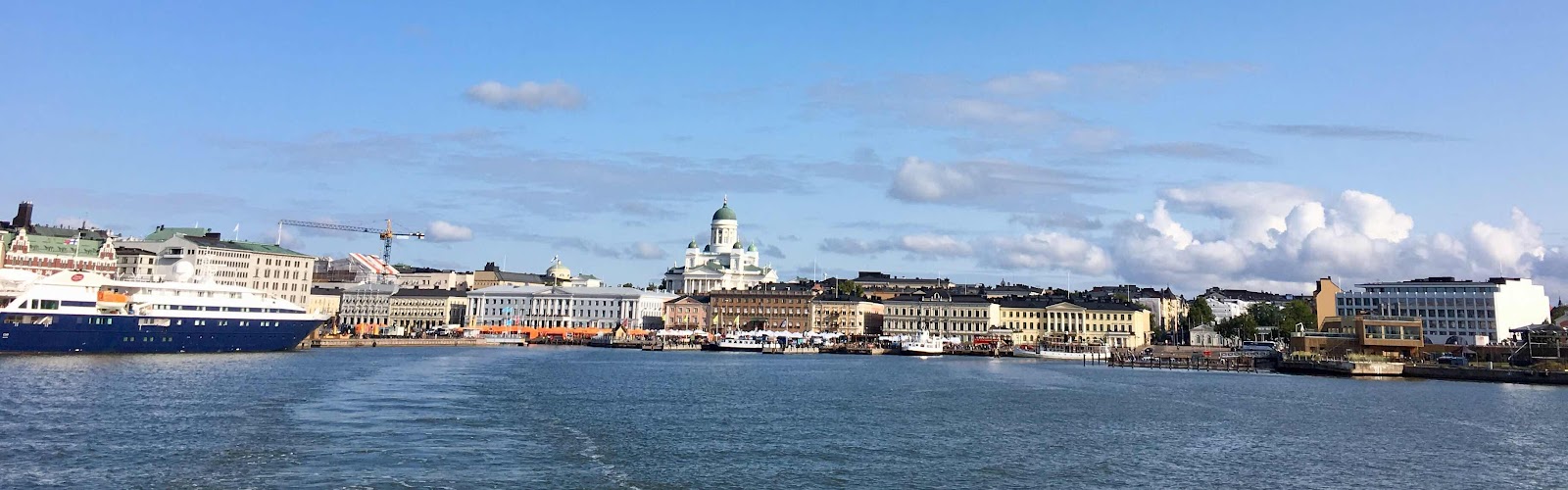
Helsinki, Finland - you know, that Scandinavian country that, like Iceland, confuses most of us because it not part of that neat little cluster with Denmark, Sweden and Norway. (Yes, there is also Greenland, an autonomous Danish territory, which is very defineitley NOT for sale.) And frankly, the “other” Scandinavian countries can’t quite figure Finland out either. Similarly, the Fins will proudly tell you how different their culture and language is. Helsinki is the country’s capital and by far its largest city, with a population of 1.5 million in a country of 5.5 million. Her maritime feel, the mood and architecture is much more akin to Eastern Europe and Russian cities than anywhere in Scandinavia, which she had been part of since the 13th century when Sweden slowly began taking it over. It was a Grand Duchy of Russia from 1809 until 1917, when it took advantage of the Russian revolution and declared its independence. It joined the EU in 1995. Considered very progressive, Finland was the first European state to grant all adults the right to vote. Although traditionally agrarian, innovation and technology has made its mark. The country essentially skipped land lines, going directly to cellular, and Nokia is a major Finish brand. It has one of the world’s highest per capita incomes and standard of living, while achieving 2nd in the world in closing the gender gap disparity - all while embracing the Nordic social welfare model. (Hmmm guess such a thing really is possible.) No wonder Finland rates in the top 5 on the world’s Happiness Scale. Visit its iconic Cathedral, stroll through its parks, wander it’s food and craft markets and you’ll be happy too!

There is an ease and playfulness, along with a sense of order that is readily felt here and is reflected in the simplicity of the flag’s bright blue cross on a white ground representing Finland’s 168,000 lakes and 179,000 islands. Merimekko has been celebrated around the world since 1951for its original bold, simple, enduring design of housewares, fabric and clothing. Environmentally conscious, Finns proudly protect the 400 remaining indemic Saimaa Ringed Seal by simply eliminating fishing nets at the lake where they live. Suomenlinna is a “must visit” inhabited 18th century fortress. Originally built as protection against Russian expansion, this 8 islands UNESCO World Heritage Site is readily accessible by ferry for hiking, picnicking and relaxing. Evie enjoyed a moment of victory atop a cannon. Watching today’s multi story commercial and fishing ships thread through its islands is a nail biting experience. A wonderful museum and gallery space, with a handful of places to pick up a bite topped off our visit, although some of us were intrigued by the dozens of people attending a festive day of yoga.
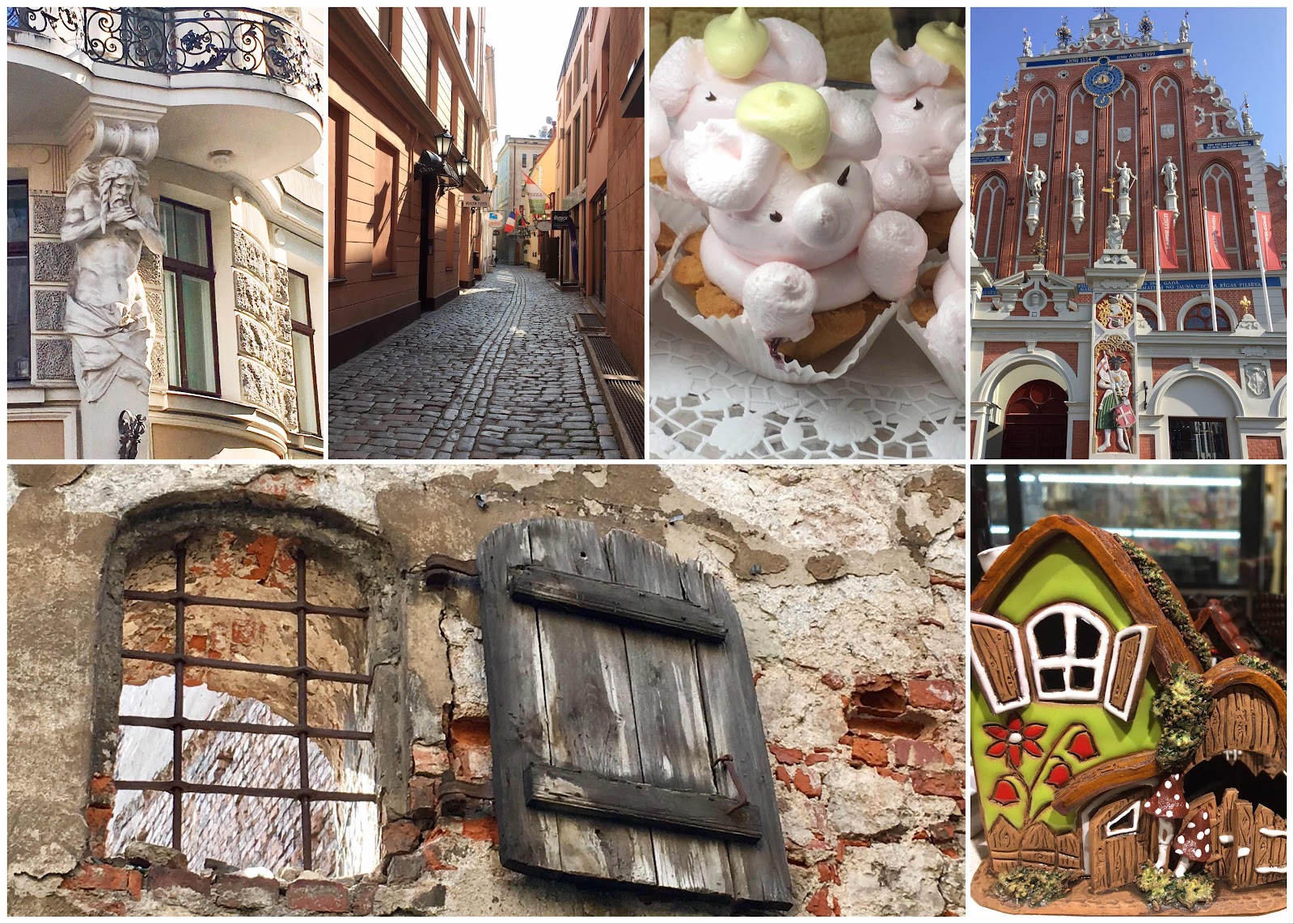
Riga is Latvia’s capital and located between Estonia (you remember Tallinn) and Lithuania (coming up next). Lithuania was named by the Germans in the 12th century, after the Livonain people who lived here. Like many other Baltic countries, it was rule by Swededen, Poland and Russia and gained its independence in 1918 (.... following a theme here?) In 1930 it was forced back into Russian control, followed by the Nazi’s (more on that in a moment) then reoccuiped by Russia until finally regaining its independence in 1991 and joining the EU in 2004. Today 26% of Latvia’s population is ethnic Russian, creating ongoing tensions with Russia, who would love to regain its valuable ports. Riga has a large, charming cobblestones medieval town center with a playful festive feel. Pastries and pastel meringues, some as whimsical creatures, are tempting with a cup of coffee. Note the dark skinned figure holding the red and white flag on the fairytale like pink facade of the House of the Blackheads that we also saw in Tallinn. There are also blocks of art nouveau facades, reflecting a time in the late late 1800 through early 1900’s when Riga’s population tripled and the city was quite wealthy, in part from its impressive port - which again is a mainstay of its economy, along with tourism, in this city of 640 thousand in a country of 1.9 million.
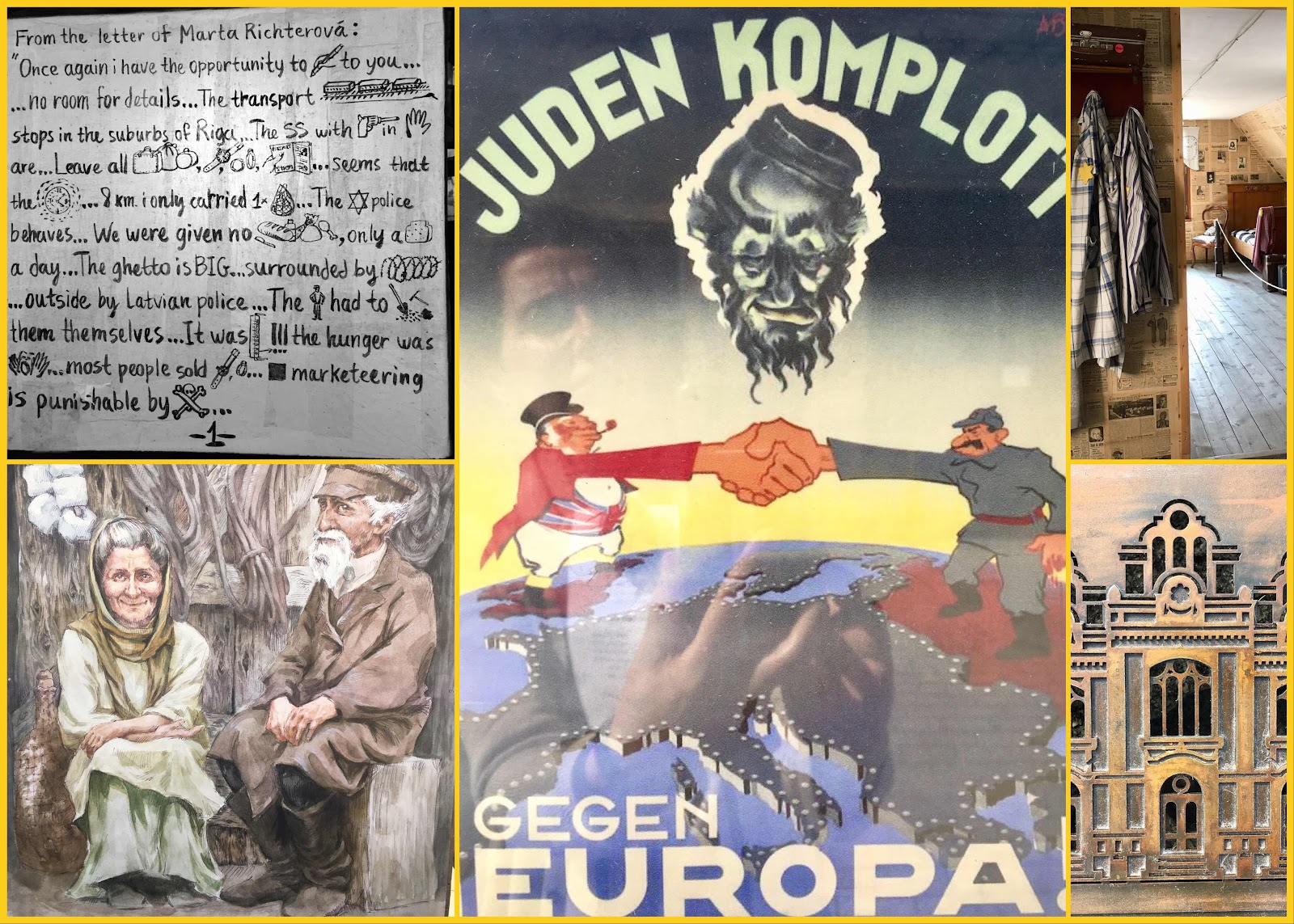
There is also a much darker side to Riga’s story. The pogroms (a Russian term describing the riots and massacres aimed at Jews) of the 19th and early 20 century had not affected independent Latvia. Many Russian and Eastern Jewish people chose to emigrate here. Yiddish became their primary language, with Hebrew as the language of educational instruction. Their economy flourished. Jews formed political parties and participated as members of parliament. Before World War I there were 190,000 Jews in Latvia, nearly 10% of the population. The population declined during WWI, with a majority remaining in Riga. Stalin invaded Latvia in 1940 and deported many Jews to Inner Russia and what was to become Israel. Beginning in 1941, German Nazi’s murdered 90% of those who remained, as well as German Jews that had been forced into Riga. Most notably was the Rumbula massacres, when the Nazis killed over 25,000 Jews, in just a couple of days, in the Rumbula forest very near Riga. The Riga Ghetto Museum does a uniquely engaging description of what it was like for the people who lived through the Holcuast period; from the three and four room wooden homes shared by up to 30 people, to the bronze cast of the old synagogue, the reinterpretation of old photos to paintings and transcriptions of letters with pictographs to communicate to Jewish people who were forbidden to learn to read. Today there is a vital Jewish community of approximately 5,000 living in Riga.

Klaipėda, Lithuania - is a charming and very popular destination for those living in surrounding countries. And why not? It has lovely silky sand beaches that remind us of the Long Islands Hamptons without the over development. The food is delicious - with potatoes being THE most popular ingredient, but please don’t pass up the bright beetroot delicacies. Klaipėda is Lithuania’s third largest city, yet its old town’s seaside location feels like a charming medieval town with cobbled streets and canals with a distinctly German flavor. Those in-the-know take the car ferry to nearby Juodkrantė. This is an island of forests, beaches and a charming small town. (Imagine a larger Shelter Island with hills.) People search for amber in the beach. Oversized weathervanes with whimsical designs in nautical colors top homes near the sea to guide fishermen home to their families. Witches Hill rises up 140 feet from the sea. They say from time immemorial it has hosted banquets of reveling devils and witches. Wander it’s paths and view 80 oak sculptures from woodcarving artists from all over Lithuania that telll the story of Neringa and Naglis. However, it might be safest to return to Klaipėda and stay at Michaelson boutique hotel. Located in an old brick storehouse, it’s located right on the water, with no devils or witches reported to date.
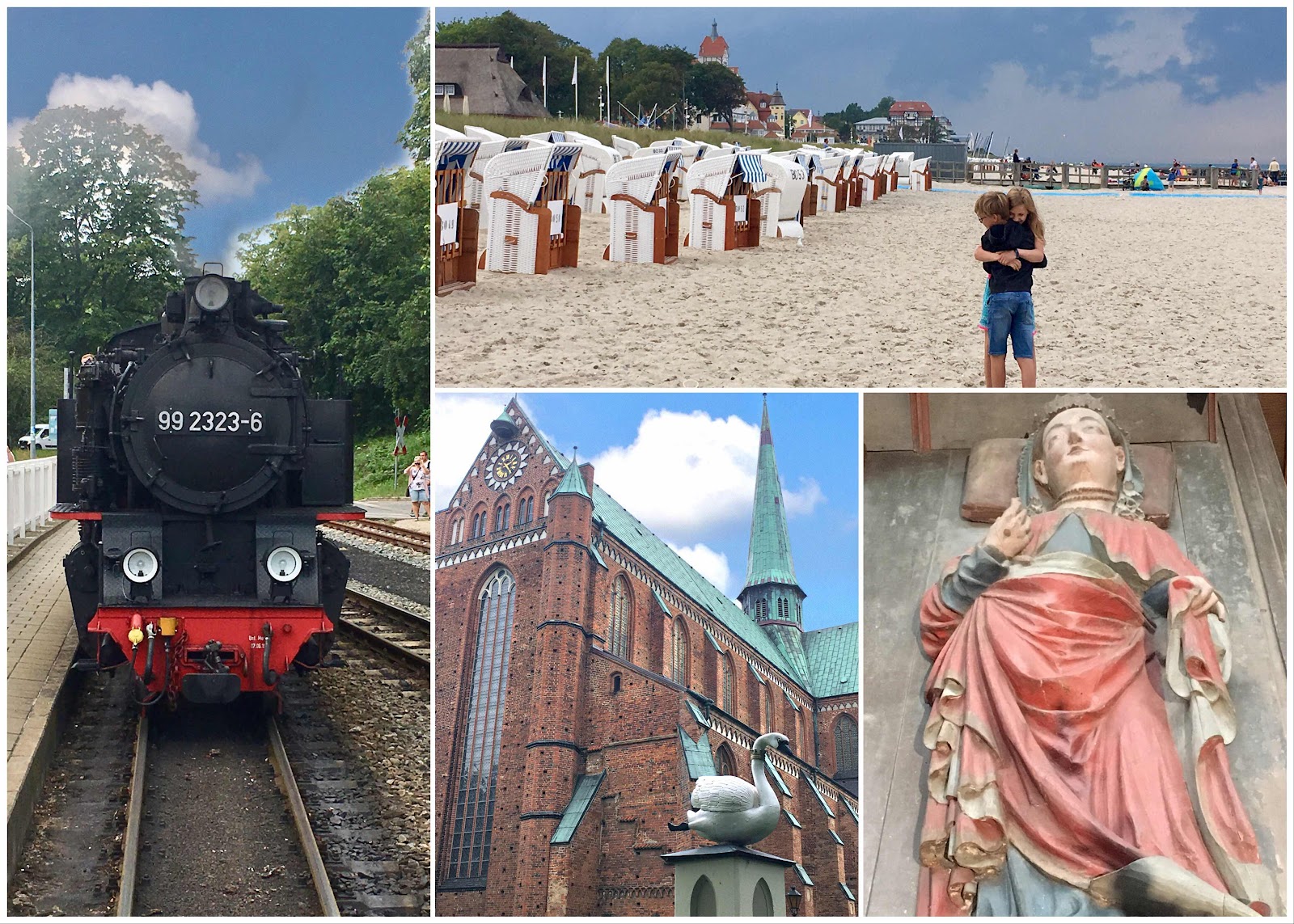
Warnemünde, Germany - is the last “blog stop” for this Baltic Cruise trip. Founded in the 1200’s, for centuries Warnemünde remained a simple fishing village. It was purchased by Germany in 1323 to safeguard critical access to the Baltic Sea. Today it acts as a gateway to the city of Berlin, which is 153 miles inland. The 150 miles of beach and seaside towns welcome tourists. We were fascinated by the rattan Strandkorb, aka beach chair . Folded up they store all manner of beach gear, but open to reveal seating for two, foot rests and canopy protection from the sun. The complexity and extreme engineering indicate that this is clearly the Mercedes Benz of beach chairs! The grandkids joined us for coal powered single gauged train trip into the countryside. (We decided the electric car we use in Boston had given us enough carbon credits.) Nearby Doberaner Münster is the charming main Lutheran church located in Bad Doberman, Mecklenburg. This charming UNESCO World Heritage Site is what remains of then1368 Doberan Abbey, which was used as the burial site for regional rulers and the abbey’s monks. The interior altars, sculptures and artwork collectively create a magical, fairytale like experience. Swans have made the grounds their home.


